How to read a green claim
“Natural”, “herbal” and “plant-based” are easy words to print on a label. Here is what to ask before you believe one, whether you’re buying a kurta or sourcing fabric for a brand.
Five questions to ask
What exactly is the dye made from?
If it comes from a plant or a mineral found on the earth’s surface, it is mostly biodegradable and safe. If it comes from petroleum, coal tar or toxic heavy metals, it isn’t.
What fixes the colour?
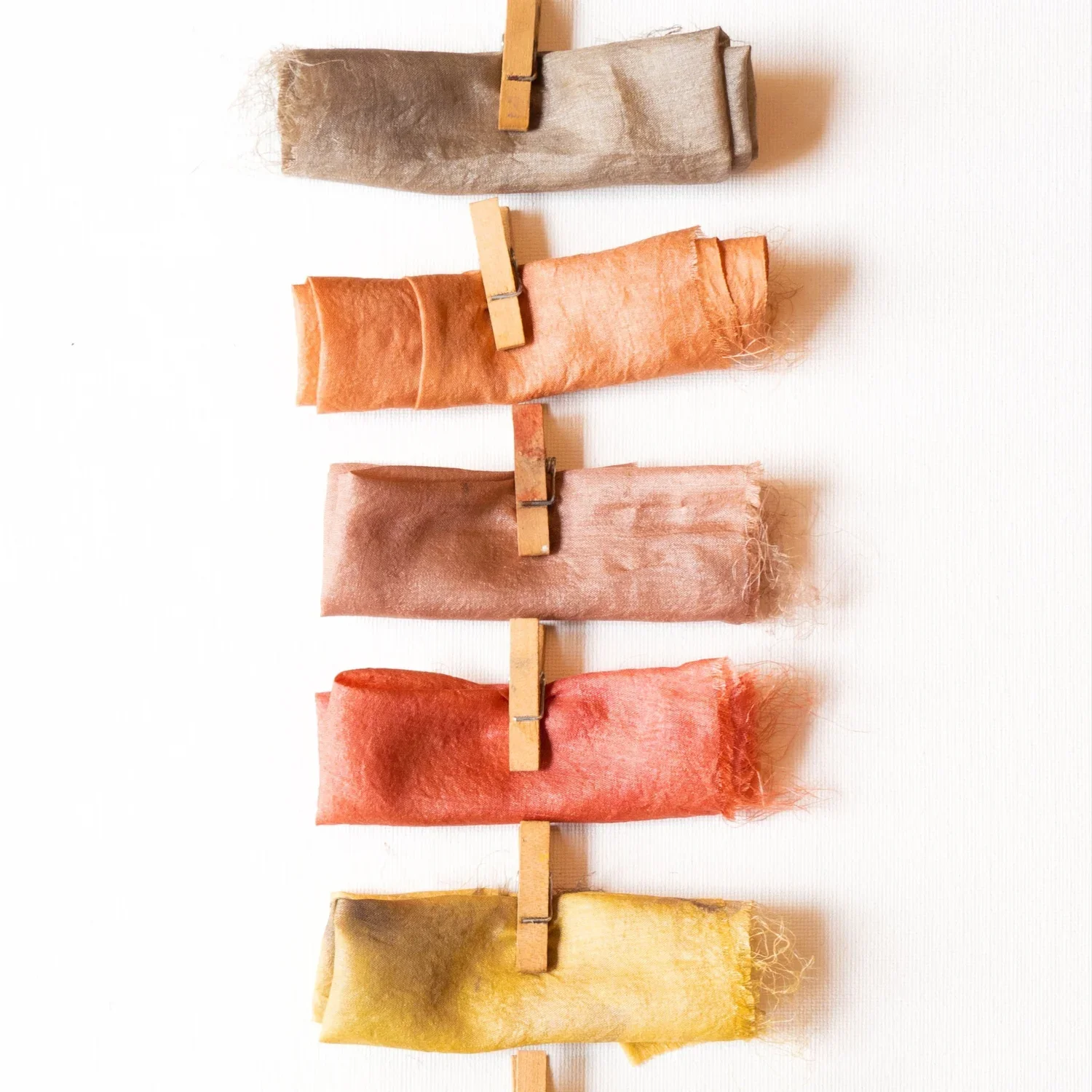
Most natural dyes need a mordant to hold. Alum and iron are the usual safe ones. A natural dye with an unsafe fixer is not a clean process.
Is the whole process natural, or one step?
Scouring, mordanting, dyeing and finishing all count. A fabric can carry a plant dye and still go through harsh chemicals before and after.
Has it been tested for fastness?
Ask whether the colour has been tested for washing and light. If no one has tested it, no one knows how long it will last. See our fastness results.
How should it be washed?
Naturally dyed cloth needs gentle care. A maker who knows the process will tell you exactly how, and how many washes to expect.
Words that say little on their own
“Herbal”
Can mean a plant extract was added, not that the colour came from plants. Ask what share of the dye is plant-based.
“Eco-friendly”
Has no fixed meaning. Ask what was measured: water, chemicals, waste, and against what.
“Natural colour”
Sometimes describes the shade, an earthy tone, rather than how it was dyed.
“Sustainable”
A goal, not a test. Look for the facts behind it: source, fibre, fixer, process and care.
Keep two things in mind: a natural dye process won’t leave the water toxic after use, and it will be biodegradable.
Go deeper, for free
The Dark Side of Colour is the first of five short films in Understanding Colours, our free course on the history of dye and what it costs. Made by Namrata Bhutoria under the Impart + Nalli Fellowship 2024–25.